

Using Music to Bring Your Brand’s Vision to Life at Corporate Events


Music brings a brand’s vision to life by transforming abstract ideas, such as innovation, sophistication, confidence, creativity, or connection, into an atmosphere guests can immediately feel. At a thoughtfully produced corporate event, entertainment becomes part of the brand experience rather than a separate performance added to the agenda.
Music brings a brand’s vision to life by translating its values, personality, and audience expectations into an emotional experience. At corporate events, the right live performance, DJ direction, pacing, and sound design can make every transition feel intentional, strengthen brand recall, and help guests connect with the message more deeply.
A corporate event may be designed to introduce a product, celebrate a milestone, strengthen professional relationships, recognize a team, or reposition an organization. Regardless of the objective, the music should help guests understand how the brand wants to be perceived.
The most effective corporate entertainment does not simply fill the room with sound. It communicates the character of the organization hosting the event.
Music can turn brand strategy into a felt experience
A brand vision often begins with language. Leadership teams speak about values such as trust, innovation, excellence, warmth, accessibility, or transformation. Event designers then translate those ideas into lighting, décor, staging, menus, presentations, and guest interactions.
Music completes that translation emotionally.
A modern technology company may want its event to feel progressive, energetic, and optimistic. A luxury real estate firm may prefer a sophisticated atmosphere that communicates confidence without becoming overly formal. A nonprofit organization may need warmth, sincerity, and a strong sense of human connection.
These distinctions should influence more than the playlist. They should shape:
The type of musicians or DJ selected
The instruments and arrangements used
The tempo throughout the event
The balance between background music and featured performances
The transitions between presentations, dining, networking, and celebration
The visual presentation and wardrobe of the performers
The overall sound level and production approach
When entertainment decisions begin with brand identity, every musical element can reinforce the event’s purpose.
The strongest corporate soundtracks begin with brand identity
Selecting familiar songs is not the same as designing a branded musical experience. Before choosing genres or performers, it is important to understand the organization behind the event.
What does the brand stand for? How does it communicate with its audience? Is its personality refined, adventurous, approachable, artistic, authoritative, or disruptive? What should guests feel when they enter the room, and what should they remember when they leave?
The answers create a creative framework for the entertainment.
For example, an established financial organization hosting an executive reception may benefit from elegant piano, contemporary instrumental arrangements, or a polished live ensemble. A lifestyle brand introducing a new collection may prefer modern live interpretations followed by an energetic DJ set. A company celebrating a major anniversary may use music from different eras to reflect its history and future direction.
The objective is not to force the company’s messaging into every song. It is to create an atmosphere that feels naturally consistent with the brand.
Live music creates presence and human connection
Live music introduces an immediate sense of occasion. Guests recognize that the experience has been prepared specifically for the room, the audience, and the moment.
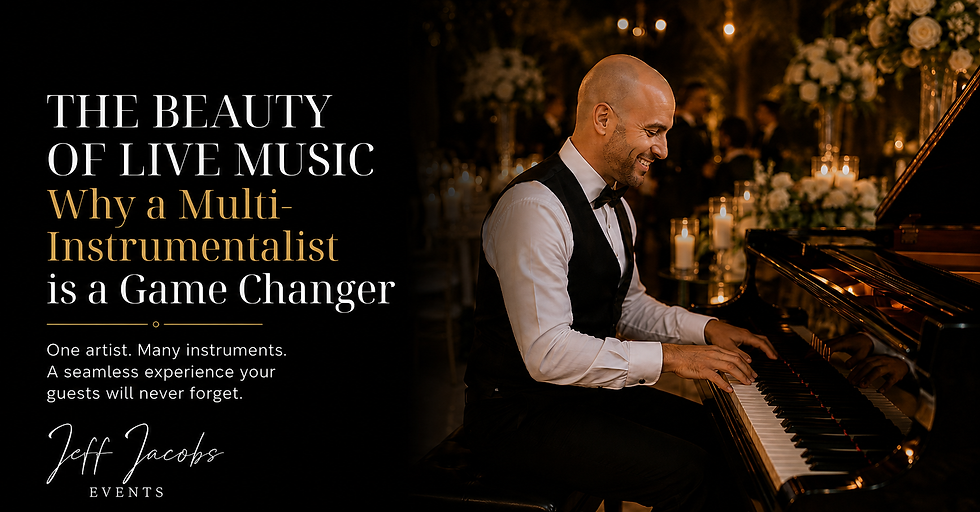
A pianist, vocalist, violinist, saxophonist, guitarist, or curated ensemble can give an arrival reception a polished identity before the formal program begins. Live performances can also support important moments such as an executive entrance, product reveal, awards presentation, fundraising appeal, or closing celebration.
The value comes from more than the sound itself. Live musicians respond to the energy of the room. They can adjust their volume, tempo, repertoire, and performance style as guest behavior changes.
During networking, the performance may remain sophisticated and conversational. During a reveal, it can become dramatic and focused. After dinner, it may shift toward recognizable songs that invite participation.
That adaptability allows live music to feel personal while still supporting a structured corporate program.
A DJ gives the event shape, momentum, and flexibility
A professional DJ contributes far more than a sequence of songs. The DJ helps manage the event’s energy from one phase to the next.
Corporate events frequently include several environments within a single evening. Guests may move from registration to cocktails, from cocktails to presentations, from presentations to dinner, and from dinner to dancing or continued networking.
Each transition should feel connected, but not repetitive.
A DJ can subtly increase momentum as the evening develops, support announcements and walk-on moments, accommodate schedule changes, and respond quickly to audience preferences. The music can remain polished during executive conversations and become more celebratory when the formal agenda concludes.
For events with diverse audiences, DJ direction is particularly valuable. Employees, executives, partners, clients, and international guests may represent several generations and cultural backgrounds.
A carefully directed DJ set can create broad appeal without making the event feel generic.
Live music and DJ entertainment can work as one experience
Corporate planners do not always need to choose between a live performance and a DJ. In many cases, the strongest result comes from combining both formats into one cohesive entertainment plan.
Live music can create refinement and visual interest during arrivals, cocktails, dinner, or a featured presentation. The DJ can then extend the evening, introduce a broader repertoire, and respond to the room as guests become more social.
The transition should feel intentional. It should not appear that one entertainment provider has finished and another has suddenly begun.
Musicians may perform over selected DJ tracks, participate in a collaborative set, or reappear during the evening for featured moments. A pianist or instrumentalist can also introduce a theme that later becomes part of the DJ’s musical direction.
This integrated approach provides the emotional presence of live performance and the flexibility of a professionally managed DJ experience.
Music should support every phase of the guest journey
Guests begin forming impressions before the main program starts. The music they hear during arrival influences how they perceive the environment, how quickly they settle into the space, and how comfortable they feel interacting with others.
Arrival and registration
The opening music should establish identity without demanding too much attention. It can feel sophisticated, welcoming, modern, or energetic depending on the event’s objective.
The sound level should allow guests to greet one another, complete registration, and understand directions from the event team.
Networking and cocktails
During networking, music should create movement and warmth while protecting conversation. Live instrumental arrangements, contemporary lounge selections, acoustic interpretations, or carefully curated DJ sets can help prevent the room from feeling static.
Presentations and branded moments
Music can frame executive entrances, video presentations, product demonstrations, award announcements, and stage transitions. These selections should be rehearsed and timed with the production team.
A brief musical cue can make a presentation feel polished. An unsuitable cue can make an important moment feel disconnected from the brand.
Dinner and hospitality
During dinner, entertainment should complement the hospitality experience. It may remain subtle or include a focused performance, depending on the event format.
The objective is to enhance the environment without competing with service, conversation, or speeches.
Celebration and closing
As the formal program concludes, music can signal that the atmosphere is changing. The transition may lead toward dancing, a high-energy performance, an after-party, or a more relaxed networking environment.
A well-designed closing sequence helps the event finish with confidence rather than gradually losing momentum.
Brand alignment is more important than genre
It is tempting to describe an event soundtrack using broad categories such as jazz, pop, classical, electronic, or Latin music. Genre can be helpful, but it should not become the entire creative direction.
Two performances within the same genre can communicate completely different impressions.
A piano interpretation of a contemporary song may feel elegant and understated. A full-band arrangement of the same song may feel celebratory and theatrical. An electronic track may feel futuristic in one setting and overly aggressive in another, depending on its arrangement, volume, and placement.
The right question is not simply, “Which genre should we choose?”
The more useful question is, “How should this event feel, and which musical choices will create that feeling?”
Repertoire should be selected according to the brand, audience, environment, and purpose of each moment.
Production quality protects the brand experience
Even an excellent performance can lose its impact when the technical execution is inconsistent. Sound quality, microphone placement, volume management, stage position, lighting, and coordination with the venue all influence how guests experience the entertainment.
Luxury and executive audiences notice details.
Music that is too loud can interrupt important conversations. Long periods of silence between program segments can make an event feel disorganized. Poorly balanced sound can distract from presentations and create an uncomfortable atmosphere.
Entertainment planning should therefore include communication with:
The event planner
Venue management
Audiovisual teams
Stage managers
Brand or marketing representatives
Speakers and presenters
Catering teams when service timing affects the program
Professional coordination ensures that the music strengthens the brand rather than competing with the event’s operational needs.
The best entertainment feels intentional, not overproduced
A branded experience does not require placing logos on instruments, repeatedly announcing company slogans, or selecting songs with overly literal connections to the organization.
Luxury audiences often respond better to subtlety.
The entertainment can reflect the brand through its style, presentation, pacing, arrangements, and emotional tone. Guests may not consciously identify every creative decision, but they will notice that the experience feels cohesive.
That sense of cohesion is what makes an event feel elevated.
A refined corporate soundtrack should support the room without constantly asking for attention. Featured performances can become memorable focal points, while the remaining music provides continuity throughout the evening.
What planners should share before entertainment is designed
The more context an entertainment professional receives, the more accurately the music can represent the event.
Useful information includes:
The purpose of the gathering
The company’s brand values and visual identity
The guest profile
The venue and event format
The formal program and schedule
Important executive entrances or presentations
Cultural or regional considerations
Preferred and restricted songs
Desired emotional progression
Production requirements
Expectations regarding dancing or audience participation
Mood boards, campaign materials, brand videos, previous event footage, and visual references can also be helpful. They allow the entertainment team to understand the company’s aesthetic beyond a written list of adjectives.
A memorable corporate event sounds like the brand feels
Music becomes most valuable when it helps unify the guest experience. It can make a room feel more welcoming, give presentations greater emotional impact, encourage natural interaction, and create a clear progression from arrival to closing.
For companies investing in thoughtful event design, entertainment should be considered early enough to influence the experience rather than being added after every other decision has been made.
When live music, DJ direction, production, and timing are designed around the brand’s vision, the result feels personal, polished, and unmistakably connected to the organization.
Jeff Jacobs Events creates tailored live music and DJ experiences for corporate gatherings, private celebrations, and elevated events throughout Southern California. Each entertainment plan is shaped around the audience, setting, and identity the host wants guests to remember.
For an upcoming corporate event, a private conversation about the atmosphere, program, and brand vision can help determine the right musical direction.


Comments