

How to Create an Unforgettable Atmosphere for Your Next Corporate Event


How do you create an unforgettable atmosphere for your next corporate event? Begin by deciding how guests should feel at every stage, then use music, pacing, lighting, sound and hospitality to support that emotional journey.
A memorable atmosphere is rarely created by one dramatic moment. It develops through a sequence of intentional experiences that feels natural from arrival to farewell.
An unforgettable corporate event atmosphere comes from aligning entertainment, timing, sound, lighting and guest experience around one clear purpose. Live music creates connection, a skilled DJ sustains energy, and thoughtful transitions prevent momentum from fading, helping guests feel engaged while reinforcing the company’s identity and the event’s objectives.
The atmosphere begins before the first song
Guests begin forming an impression of an event almost immediately. They notice the entrance, the lighting, the sound level, the way the team welcomes them and whether the room feels ready for their arrival.
Music plays an important role in that first impression, but it should not compete for attention. During registration, welcome drinks or early networking, the entertainment should create warmth without making conversation difficult.
A refined acoustic performance, relaxed piano set or carefully selected background mix can give the room personality while allowing guests to settle in comfortably.
The goal is not to make guests notice every song. It is to make the entire environment feel considered.
When the arrival experience is calm, polished and welcoming, guests become more receptive to everything that follows.
Entertainment should reflect the purpose of the event
A product launch, leadership retreat, awards dinner and client appreciation evening may all be corporate events, but they should not feel identical.
Before selecting the entertainment, planners should define the purpose of the gathering.
Is the company trying to inspire employees? Strengthen relationships with clients? Celebrate an important milestone? Introduce a new product? Encourage networking between people who have never met?
The answers should influence the musical style, volume, tempo and presentation.
An elegant piano or acoustic set may complement a sophisticated dinner. A recognizable mix of soul, pop and classic favorites may help unfamiliar guests connect. A more energetic DJ set may be appropriate after an awards presentation or formal program has concluded.
The best corporate entertainment supports the reason people are in the room instead of distracting them from it.
Live music creates a human point of connection
Corporate events often include carefully designed visuals, branded signage, presentations and digital displays. Live music introduces something more personal.
Guests can see the musician responding to the room. They can recognize a familiar song, observe the performance and experience a moment that is happening specifically for that audience.
This sense of immediacy can make a large ballroom feel more intimate and give a structured program a more natural rhythm.
Live acoustic guitar, piano and vocals are particularly effective during:
Guest arrivals
Cocktail receptions
Networking sessions
Dinner service
VIP hospitality
Client appreciation events
Award ceremony interludes
The performance does not always need to become the center of attention. In many luxury corporate settings, the musician’s role is to elevate the environment without interrupting conversation.
Live music works best when it feels present, responsive and connected to the room.
A DJ protects the energy and pacing
Live music can establish personality and connection, while a professional DJ provides flexibility across a longer event timeline.
A DJ can adjust the pace quickly, support walk-on moments, introduce speakers, provide musical cues and transition the room from networking into celebration.
This is particularly valuable when the event includes several distinct phases. The musical requirements for cocktails may be completely different from those needed after an awards presentation.
A skilled corporate DJ should be able to move between those moments without making the evening feel divided.
The right DJ also pays attention to more than the dance floor. They monitor guest response, event timing and the tone of the program. They understand when the music should become more noticeable and when it should remain in the background.
A successful DJ set is not simply a collection of popular songs. It is a live response to the people, timing and purpose of the event.
The strongest experiences often combine live music and DJ entertainment
Planners are sometimes asked to choose between a live musician and a DJ. For many corporate events, the most effective answer is a carefully coordinated combination of both.
Live music can welcome guests and create a sophisticated atmosphere during cocktails or dinner. A DJ can then support presentations, announcements and the later celebration.
When one versatile entertainer can manage multiple portions of the event, the transitions may feel even more cohesive.
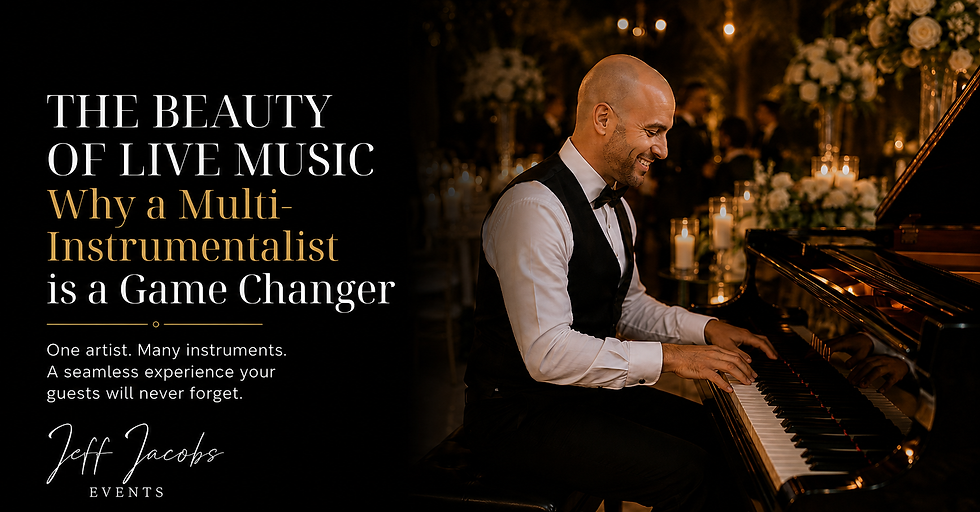
A multi-instrumentalist who can move from acoustic guitar or piano into a professional DJ set can reduce unnecessary handoffs and preserve the atmosphere throughout the evening.
This approach also creates visual and musical variety without requiring the planner to manage several unrelated entertainment teams.
The result should not feel like separate performances placed together. It should feel like one continuous experience that evolves with the event.
Sound, lighting and room design influence how music is experienced
Even an outstanding performance can lose its impact if the production does not suit the venue.
Sound should be clear and evenly distributed, but never so loud that guests need to raise their voices during networking or dinner. Lighting should help define the mood while allowing guests, speakers and performers to remain visible.
The physical layout also matters. A musician placed too far away may feel disconnected from the event. A DJ booth that blocks a focal point or introduces visual clutter may weaken an otherwise refined design.
Entertainment and production decisions should therefore be coordinated with the venue, planner and audiovisual team.
Consider:
The size and shape of the room
Indoor or outdoor acoustics
Guest count
Stage placement
Available power
Presentation requirements
Noise restrictions
The distance between networking and performance areas
The desired visibility of the entertainer
Luxury is often communicated through restraint, clarity and thoughtful placement rather than excessive volume or production.
Transitions are where premium events feel effortless
Guests may not consciously notice a perfect transition, but they will notice when the momentum disappears.
Long silences, sudden changes in volume, delayed introductions or confusion between entertainment providers can make an event feel less organized.
Music can help connect:
Registration to the opening program
Cocktails to dinner
Dinner to an awards presentation
The final speaker to the celebration
Formal programming to dancing
The closing song to the guest departure
Arrival and networking
Begin with music that creates warmth without demanding attention. The atmosphere should feel active but comfortable.
Presentations and key moments
Use clean musical cues for speaker entrances, awards, brand reveals and important announcements.
These moments should feel intentional rather than theatrical unless the event concept calls for a dramatic presentation.
Dinner and conversation
Allow the music to complement the room. Familiar melodies, tasteful acoustic arrangements and polished instrumental selections can maintain energy without competing with conversation.
Celebration
Once the formal program concludes, the entertainment can become more expressive. The pace can rise naturally instead of changing without warning.
Closing
The final selections should leave guests with a sense of completion. Ending abruptly can weaken an otherwise excellent experience.
When transitions are planned musically, the entire event feels more polished without appearing overproduced.
Personalization turns entertainment into a brand experience
Corporate entertainment should not feel like a generic playlist that could have been used at any event.
Personalization might include:
Music connected to the company’s location or history
Songs selected around the event theme
Walk-on music for executives or award recipients
A custom arrangement for a major announcement
Music reflecting the audience’s age range and cultural background
Brand-approved selections for product launches
Requests submitted by employees or guests
A closing song connected to the event message
The entertainment does not need to repeat the company name or mimic an advertisement. Subtle alignment is often more effective.
The strongest brand experiences allow guests to feel the company’s personality without being constantly reminded that they are attending a branded event.
Reading the room matters more than following a fixed playlist
A detailed entertainment plan is important, but an experienced performer must also be able to adapt.
A networking reception may become more conversational than expected. Dinner service may run behind schedule. Guests may respond strongly to one musical style and remain indifferent to another.
The entertainer should be able to adjust without making the change obvious.
This ability is especially important for audiences that include executives, clients, employees, partners and guests from different generations or cultural backgrounds.
A rigid playlist cannot account for every response. An attentive performer can.
Great entertainment is planned in advance but refined in real time.
That balance allows the event to remain organized while still feeling spontaneous and alive.
Questions corporate event planners often ask
What type of music works best for a corporate event?
The best music depends on the event’s purpose, guest profile and timeline. Acoustic guitar, piano, soul, jazz and familiar contemporary music often work well during networking and dinner. A DJ can introduce higher-energy selections once the formal program concludes.
Should a corporate event have live music or a DJ?
Live music is ideal for creating connection and sophistication, while a DJ offers flexibility, pacing and a broader range of music. Events with several distinct stages often benefit from combining both.
How loud should music be during networking?
Music should be audible enough to create atmosphere but comfortable enough for guests to speak without raising their voices. The sound level can increase later if the event moves into a celebration or dance portion.
When should entertainment begin?
Entertainment should generally begin as guests arrive. The first musical impression helps the room feel active and welcoming, even before the formal program starts.
Can the entertainment be customized around a company or event theme?
Yes. Music can be selected around the company’s identity, audience, event concept, presentation schedule and desired emotional tone. Custom introductions, musical cues and special song requests can make the experience more distinctive.
An unforgettable atmosphere feels natural
Creating an unforgettable corporate event atmosphere is not about adding more entertainment, louder music or increasingly complex production.
It is about making thoughtful decisions that support the guest experience.
The music should welcome people into the room. The production should feel polished. The transitions should protect the momentum. The entertainer should understand when to lead the energy and when to let the event breathe.
When every element works together, guests remember more than the playlist. They remember how the event made them feel.
For planners envisioning a corporate gathering in Southern California or a destination setting, Jeff Jacobs brings live vocals, acoustic guitar, piano and DJ entertainment together in one adaptable experience.
Rather than beginning with a standard package, the entertainment can be shaped around the event’s purpose, schedule and audience.
Explore Jeff Jacobs’ corporate event performances and discover what the right musical atmosphere could add to your next gathering.


Comments